Maps
Study Examines How Much Travelers Really Know About European Etiquette
Most travelers pack a few assumptions about other cultures alongside their passport. They might believe everyone in Europe greets each other with a kiss on the cheek, or that showing up a little late is chic, or that warmer languages and climates mean warm, touchy greetings. Preply surveyed 1,600 people across 27 countries, suggesting that many traveler instincts are wrong.
The Root of Assumptions
Preply first examined how people judge cultures before they arrive and participate in them. 3,608 adults in six countries rated how different languages sound. French won for sounding romantic (54%), and Italian was close behind at 43%. Portuguese and Spanish led for warmth, while English came in last at just 7%. The article argues that these impressions of language often shape a visitor’s real-world expectations, even if it doesn’t match etiquette, or indeed, reality.
Greetings: Let the Other Person Lead
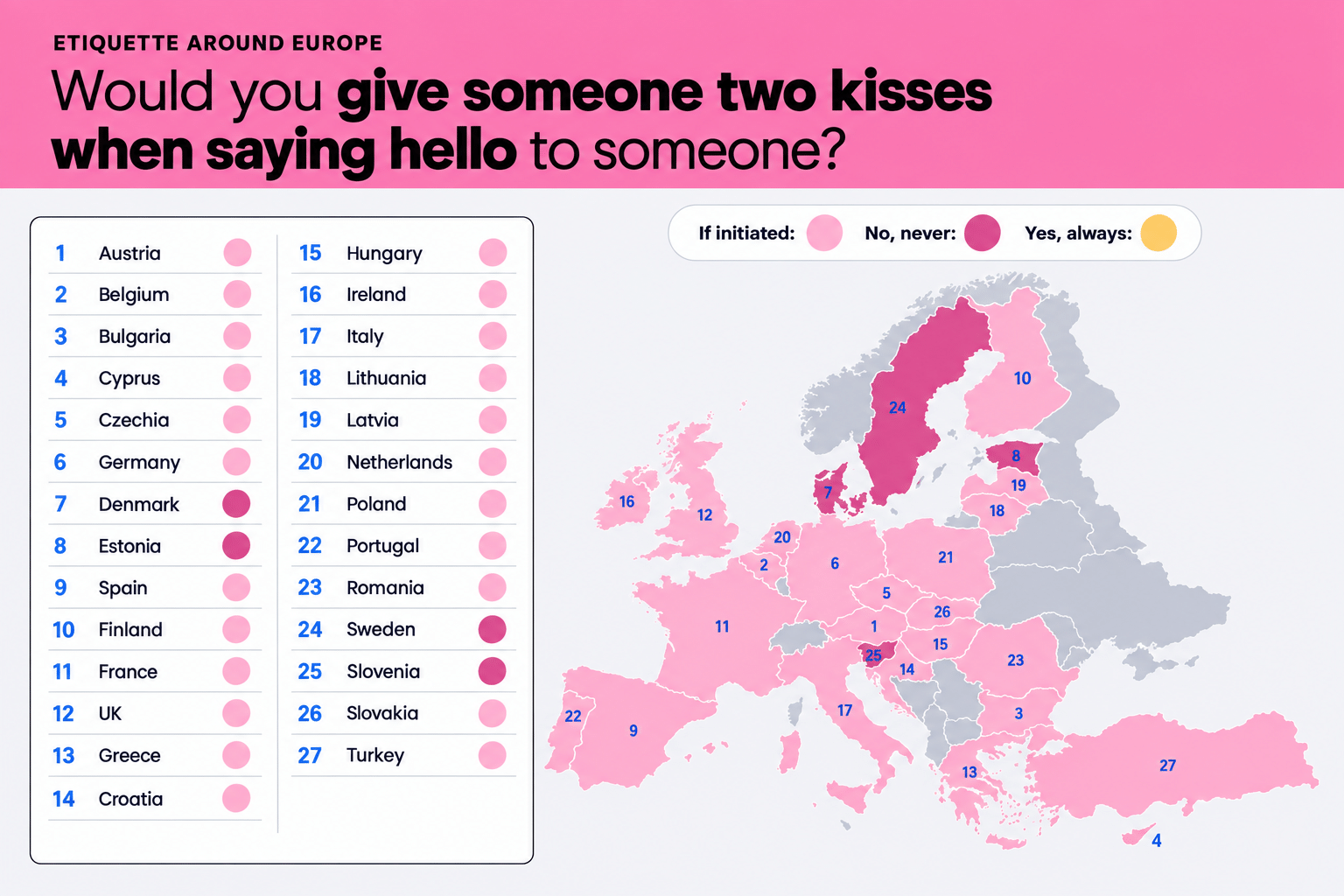
The double cheek kiss is Europe’s most famous greeting, but no one appears comfortable initiating it. In 23 out of 27 countries, most respondents said they’d only go in for it if the other person did first. Not a single country had a majority willing to initiate the double-cheek kiss. In Estonia, Denmark, Slovenia, and Sweden, people never do the cheek kiss. The article’s map shows exactly how each country lines up.
Click below to zoom.
Shoes: Leave them at the Door
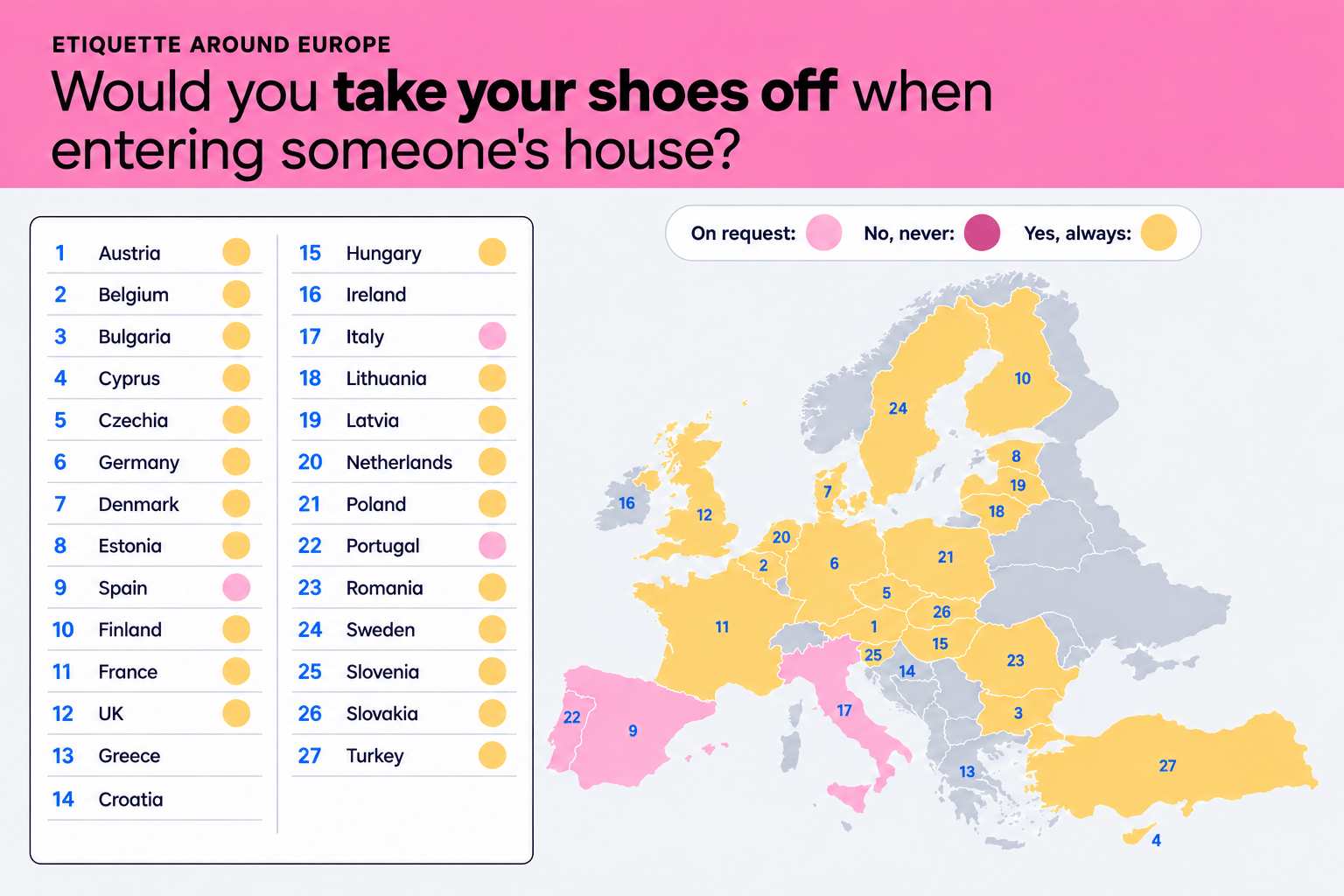
In 24 of 27 countries, the majority of people remove their shoes in someone else’s home. This was unanimous in Sweden, where 100% of respondents said they do this. Poland was close behind at 82%. Spain, Italy, and Portugal are outliers, but the Preply team had a theory about why. There’s a generational split. Under-35s take their shoes off automatically, and people aged 35 to 54 wait for their host to ask them to remove their shoes. Another map shows these preferences across continents.
Click below to zoom.
Gifts: Bring Them in Most Cases
Over half of European respondents treat bringing a small gift to a gathering as standard, and a third save this for special occasions. Finland is the only country where people said they’d never bring a gift to any social gatherings. Married respondents were 12% more likely than single people to show up with something in hand.
Food: Rules Here Are Unanimous
The survey’s only unanimous result centered on food etiquette when eating someone else’s cooking. All 27 countries saw it as a sign of respect to eat all the food on your plate. Men were a little more likely (82%) to clear their plates than women (75%).
Punctuality: Fashionably Late Doesn’t Exist
In 23 countries, the clear preference was for guests to arrive on time. Greece is the most emphatic on this point at 78%. Four countries leaned toward arriving a bit early: Czechia, Germany, Poland, and, believe it or not, France. Single people were more likely to run late, and men were more likely than women to arrive at events early.
Why Etiquette Matters
People care about etiquette and pay attention to it. The #etiquette hashtag on TikTok has 4.4 billion views, and searches on how to have good etiquette are up 373%. While etiquette is important, it does vary among countries and cultures, so maps like Preply’s creations are a helpful guide for travelers.*