Business Visualizations
Study Shows Us the Most Common Occupations by Age Group
Studying jobs by age groups provides insight into worker priorities and the impact of factors such as education, experience, and physical strength. The team at Qualtrics gathered data to create a graphic of the most common jobs held in different age categories using data from the Bureau of Labor Statistics to form their visualizations.
Click below to zoom.
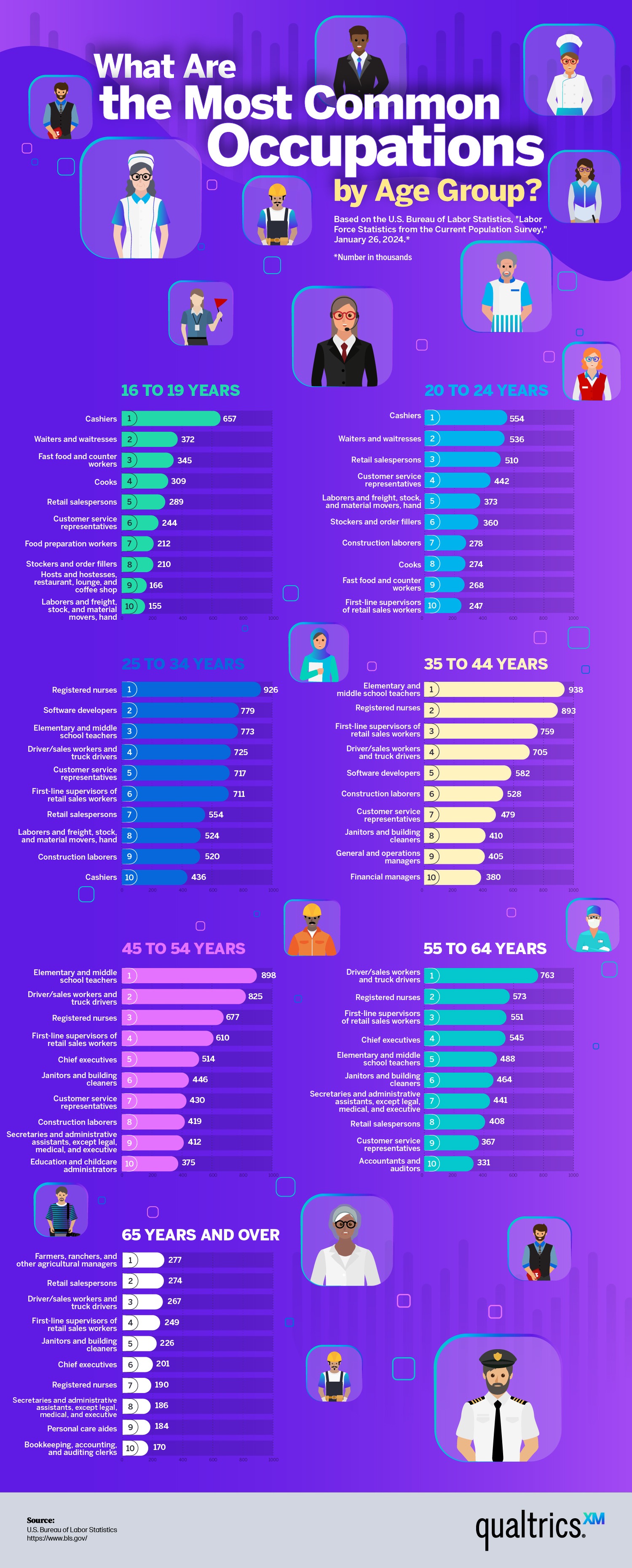
Here are the most common jobs by age:
- 16–24: cashier
- 25–34: registered nurse
- 35–54: elementary or middle school teacher
- 55–64: sales worker or truck driver
- Over 65: farmer, rancher, or agricultural manager
- Any age group overall: customer service representative
The chart shows that the most common job is a customer service rep, which is understandable given the number of industries hiring for this position. It’s a job with diverse tasks encompassing customer experience and quality of interactions with the business. Customer service jobs typically don’t require more than a high school diploma, yet they pay an average annual salary of over $60,000.
We can see from the charts that cashier and server jobs are most common among the youngest demographics. This is likely due to the low pay and hours spent on your feet. It’s an entry job for many people who grow to move on to different positions or career paths as they age and change priorities. While that’s not always the case, many servers and cashiers move on from the role in search of higher pay and less physically demanding work.
These same individuals may go on to pursue careers as teachers and nurses, if our data is any indication. These jobs require specialized education but offer higher pay, and there is a demand for these positions. It’s no surprise that many people are building lifelong careers in nursing and teaching. As for people who keep working past retirement age, farmers and ranchers took the top spot. This work is often physically demanding, but the businesses are usually generational, meaning older people get help from their descendants and stay involved with a business close to their heart.
Employers can make use of data like this, as they generally want to avoid job-hopping employees. Looking at these statistics, we can infer many reasons why someone may leave a job. Employers can address this by offering higher wages, more flexible work styles and arrangements, and an improved employee experience. Most workers seek a stable job with fair compensation for the amount of work and education required. We also note that many blue-collar jobs are represented on this list, including construction workers, janitors, and truck drivers, with fewer white-collar jobs listed. Many people work essential jobs that help us stay healthy, fed, and stocked with goods.