Charts
Highlighting 30 Safety Features Every Senior Should Know
While aging can bring positive life changes, such as retirement and the freedom to spend more time on hobbies, travel, and visiting family, it also presents unique challenges. Ooma presents a safety guide for seniors, highlighting 30 tips to help them age safely, stay connected, and maintain independence. Instead of a simple list of helpful gadgets, the team created a roadmap to help seniors navigate a rapidly changing world with confidence.
Click below to zoom.
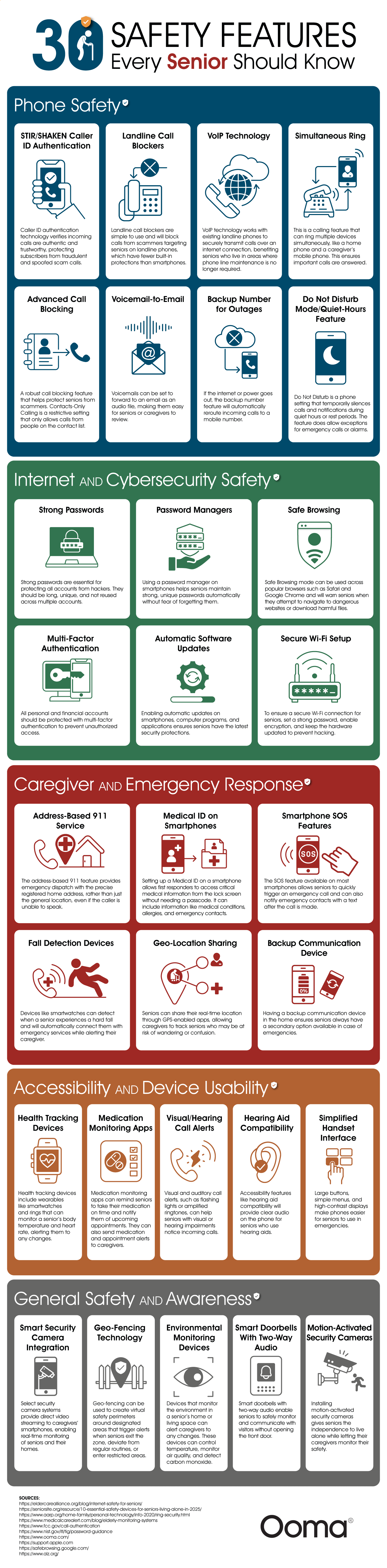
One of the most crucial sections focuses on digital safety and online scam protection. Seniors can use the Internet to learn new things and connect with others, but it’s also full of risks and schemes where criminals prey on uninformed elders. The article explains how to avoid scams with password managers and multi-factor authentication. These tips on strong password creation and extra protection can drastically lower the risk of identity theft and financial loss due to scams.
The following section focuses on physical safety and emergency response. While most of us know to call “911” in an emergency, many of us are unaware of Enhanced 911 (E911), which automatically sends a senior’s address to responders. This is critical if the senior who placed the emergency call cannot speak. A medical ID displayed on a smartphone lock screen can help EMS workers begin treatment instantly and save more lives. Fall detection devices make good use of these services by automatically sharing location and calling for help. These affordable, simple tools can save a senior’s life.
Next, the chart moves on to home security. Smart security cameras and motion-activated systems don’t have to be complicated. They can help seniors reduce stress and increase their peace of mind. Smart doorbells and two-way audio allow them to communicate with visitors without having to go to the door. Environmental monitoring devices are essential for detecting poor air quality and dangerous temperature conditions. Practical advice and the article’s compassionate tone remind readers that safety offers seniors independence.
In that same spirit of independence, the article turns to accessibility. These include visual/hearing alerts, simpler phone interfaces, and medication reminder apps. These tools address health issues that affect all seniors, like hearing loss, vision changes, and memory challenges. These apps and aids will help seniors develop healthy daily routines, reduce frustration, navigate the world, and make the most of their lives.
Lastly, the guide addresses phone safety and scam calls. Seniors can use caller ID authentication and call blocking to reduce fraudulent calls. Unfortunately, seniors are often victims of these scams. While education is also essential for helping seniors navigate these calls, modern VoIP technology and other features make the process much easier. A caller’s sense of urgency can sway them, so these tools can help them avoid the calls altogether.
The team’s tips empower seniors and their loved ones, helping them prepare for the future. This list is a conversation starter to help families plan for independent seniors to live safely and healthily.