Maps
Map Shows 26 Ways to Say “Haha”
Anyone who chats, texts, or scrolls social media will see text depicting laughter many times a day. A new map from Preply shows that the way laughter is portrayed changes dramatically depending on the language. In this “Laughing Around the World” map, Preply cataloged 26 different ways people express their mirth online, from familiar acronyms to creative onomatopoeia.
Click below to zoom.
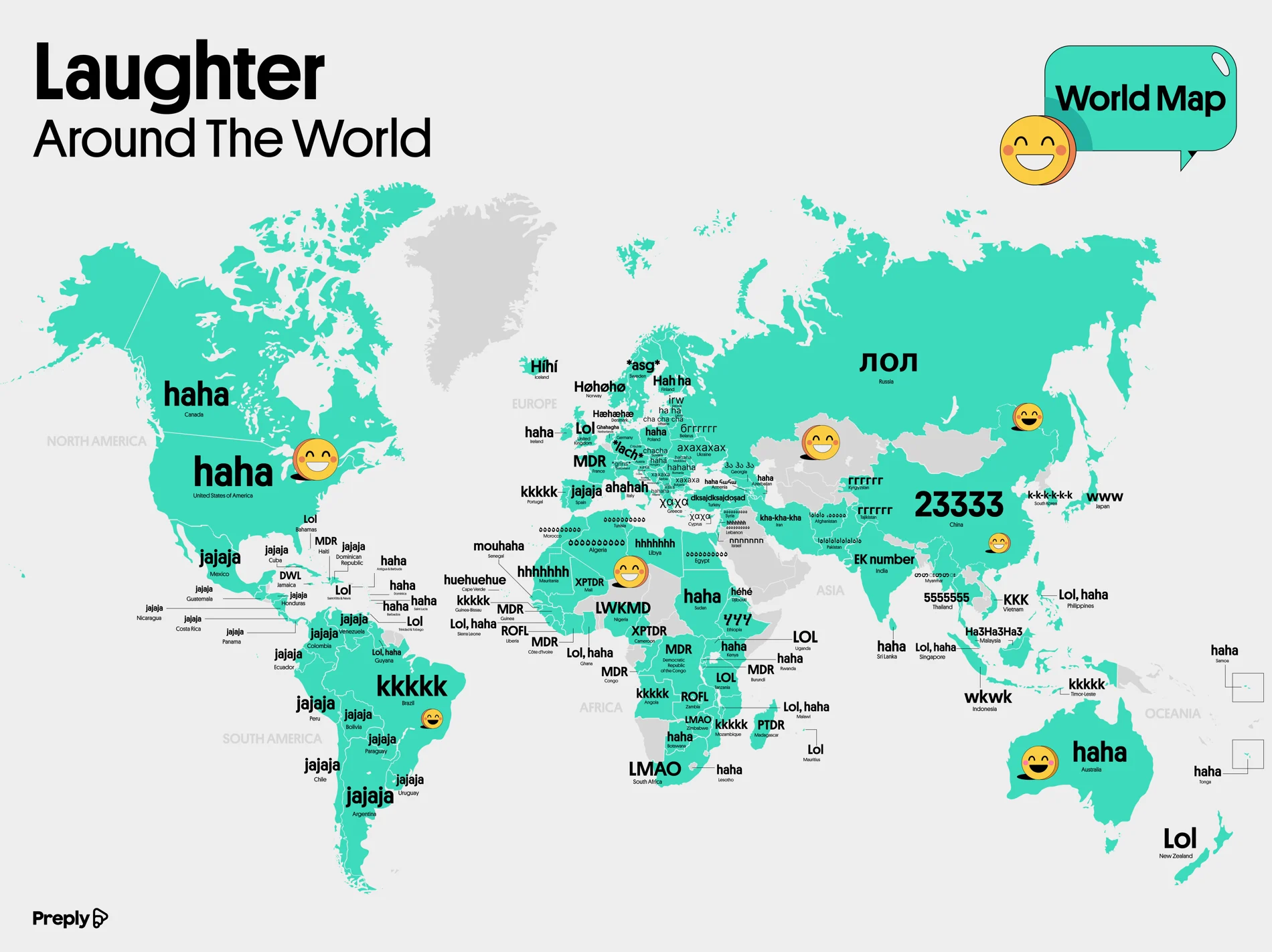
Some of the most distinct forms of laughter aren’t words at all. Thai speakers type out “55555” because the Thai word for that number sounds like “ha!” The more 5s Thai texters type, the bigger the laugh. Mandarin speakers type “23333,” while Japanese users type “www,” because the Japanese word for laughter is warau, and they think a “w” resembles a grinning face.
Other forms of laughter come straight from keyboard mechanics. Indonesians type “wkwkwk” mostly because “k” is easier to reach on a home-row keyboard than “h.” Brazilian and Portuguese speakers write out “kkkkkk” or “rsrsrsrs,” which derives from riso, the Portuguese word for laughter. The map also shows the Korean letters for laughter, which are romanized as “kkkk” or “hhhhh.”
English alone has spawned a range of laughter abbreviations, including LOL, LMAO, LMFAO, and ROFL. Other languages followed this lead. French speakers might type out “MDR” or mort de rire, which means “dead from laughing.” The French also use PTDR, or pete de rire, and XPTDR for even greater laughter. Nigerians type LWKM, which translates to “laugh wan kill me,” and LWKMD, or “laugh wan kill me, die.” In Jamaica, you’ll get a text reading DWL for “dead wild laugh.” And Estonians text “IRW,” shorthand for the word irvitamina, which describes a certain type of laugh.
In many languages, online laughter is phonetic based on whatever alphabet the speaker uses. Spanish type “jajaja,” which is the same as “hahaha,” with “jejejeje” indicating irony and “jijijiji” meaning mischief. Persian Farsi uses letters that spell out “kha-kha-kha.” Russian Cyrillic spells out “axaxaxa,” and Ukrainians have a version that indicates that their “axaxaxa” is sarcastic. Greek offers letters for basic laughter, sneaky laughter, giggling, and evil laughter.
Some options show the texture of a language. Italians write out “ahahaha” or “ehehehe” because their language lacks a strong aspirated “h” sound. Germans like to indicate stage direction with an asterisk, so they’ll text “*grins*” or “*lack*.” Polish teens spell out “heheszki,” which means something like “kicking and laughing.” Lithuanians send “cha cha cha,” but they mean laughter, not dancing.
The takeaway from this joyful map is that laughter is universal, but remarkably local in how it’s expressed through a keyboard. Our text-based laughter is shaped by phonetics, slang, alphabet, and the quirks of the keyboard style we use. In a world connected by social media, it’s helpful to recognize the symbols used by our international neighbors to better understand them and communicate clearly. Laughter text also offers a unique look at various languages and their shapes and textures.