Misc Visuals
Study Examines Cord-Cutting Statistics
A new article from Ooma examines the facts surrounding Americans’ decision to abandon cable television and landline phones in favor of Internet-based and wireless alternatives. This study illustrates a changing landscape in how people connect with one another and consume media. The piece includes a colorful list of 30 key statistics that illustrate the technological revolutions and cultural shifts shaping the world of communications and entertainment.
Click below to zoom.
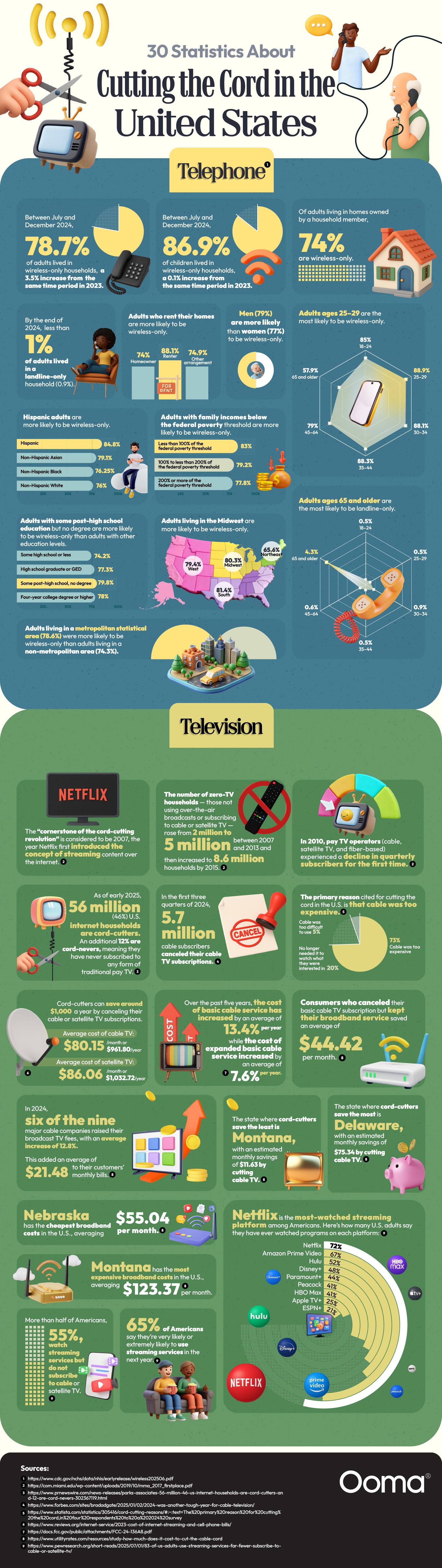
One of the most striking findings is the decline in landline phones. These were once a staple found in nearly every American home, but landlines are disappearing. By the end of 2024, only 1% of adults had a landline in their home. That’s 78.7% of adults and 86.9% of children living in a wireless-only household. They have cut the telephone cord and rely on cell service and Internet-based calls.
The article provides evidence that traditional cable TV is in trouble as well. As of 2025, 56 million households, or 45%, had cut the cord, meaning they no longer use cable, satellite, or traditional paid TV services. An additional 12% of American households are “cord-nevers,” meaning they’ve never had these services to begin with. That means over half of Americans don’t use cable.
Swaths of users are cutting the cable cord. 5.7 million cable subscribers canceled their TV services in 2024. Their main motivator was the cost of cable. 73% of cord-cutters said cable is too expensive to continue. Six of the nine major cable companies have increased their broadcast fees by 12.8% on average, which adds around $21.48 to monthly bills. Cord-cutters save about $1,000 each year by canceling cable and satellite services and sticking with broadband.
So, what replaced these cable services? Over half of Americans say they watch streaming services. 65% of these users say they’re very likely to continue using streaming services next year. The top streamer is Netflix. 72% of Americans say they’ve watched Netflix content, followed by Amazon Prime Video at 67%, then Hulu at 52%. Industry data reports that streaming surpassed cable and broadcast viewership in 2025.
This shift isn’t isolated to Ooma’s data alone. According to Nielsen’s media consumption report, streaming services accounted for 44.8% of total U.S. television usage. This surpassed combined broadcast and cable television viewing for the first time in 2025, clearly marking a definitive shift in viewer preferences toward digital platforms.
Taken together, these statistics show a clear trend toward Americans valuing the flexibility, cost savings, and on-demand access of streaming over traditional cable and communication systems. Landlines and cable are on their way to becoming relics of the past, replaced by modern wireless services and Internet streaming that better fit modern budgets and lifestyles. Advancing technology and better broadband access will likely continue to shape how households connect, entertain themselves, and make decisions about spending on phones and entertainment.