Maps
Study Examines the Power of Phone Calls on Lonely Seniors
A study from the University of Texas at Austin found that during COVID-19 lockdowns, a simple phone call to 240 seniors over four weeks measurably reduced depression rates. Can something as simple as a phone call meaningfully ease senior loneliness? The data that Ooma collected shows that a phone call can mean the world to a senior. It’s a simple act with outsized mental and physical health benefits for older adults.
Click below to zoom.
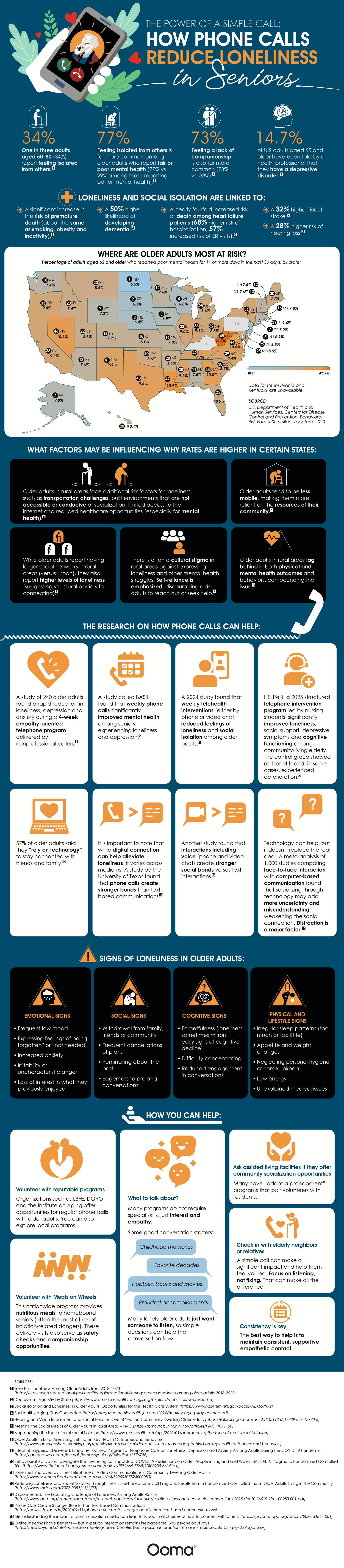
The team created a helpful map that also highlights key findings from their study. Here are a few of the most important figures:
- 1 in 3 adults aged 50 to 80 (34%) report feeling isolated.
- 77% of seniors with poor mental health report feeling isolated compared to only 29% of seniors with better mental health.
- 7% of American adults over 65 have been diagnosed with a depressive disorder.
- The map shows a wide variation in seniors reporting 14 or more poor mental health days, with a range of 5.5% among North Dakota seniors to 12.7% of West Virginia seniors.
Their data also shows that isolation is a health crisis, more dangerous than a simple mood problem. When people feel isolated, their mortality risk is comparable to that of people who are obese, inactive, or who smoke regularly. Isolated seniors have a 50% higher risk of dementia. There are nearly quadruple the death risk odds for heart failure patients who are isolated, and a 68% higher hospitalization risk. Isolated seniors are also at a 32% higher stroke risk and a 28% higher hearing loss risk. Rural seniors are the most vulnerable due to limited Internet access, transportation barriers, and a cultural stigma around expressing loneliness.
The dangers of loneliness are clear, and luckily, there are clear solutions. UT Austin’s empathetic phone call program created rapid drops in depression, anxiety, and loneliness. Weekly phone calls could improve mental health and even cognitive functioning. A 2024 telehealth study showed that both phone and video calls can have these effects.
The Ooma team also provided helpful tips that can help people spot signs of loneliness in their loved ones. If their social behavior changes, that’s a warning. This could look like withdrawal, dwelling on the past, canceled planes, and drawn-out conversations. Cognitive issues are another major red flag, like forgetfulness, trouble concentrating, and less engagement. If a senior’s sleep or appetite changes, they have persistently low energy, neglect their hygiene, or develop an unexplained ailment, this could also signal loneliness.
If you want to help fight the senior loneliness crisis, you could volunteer with the Institute on Aging’s Friendship Line, LBFE, or DOROT. Local assisted living communities might have an adopt-a-grandparent program. Volunteering for Meals on Wheels not only provides seniors with food but also offers a chance to socialize and conduct safety checks. If you are short on time, simply pick up the phone and call an elderly neighbor or relative. This study makes it clear that it’s a powerful act of kindness.