Misc Visuals
Study Reveals the Power of Mother Languages
Mother language is our first language. In a multilingual world, it holds a special place in the hearts of many. The team at Preply surveyed thousands of multilingual speakers to discover what their mother language means to them. Their results reveal that the mother language has a powerful connection to the speaker, even though people have varied relationships with it. The team examined the emotions surrounding mother language, how it affects multilingual identity, memory, migration, and the process of passing it on to children. Preply surveyed over 3,000 people in six countries across generations to offer us a deep look into the nature of mother language.
Click below to zoom.
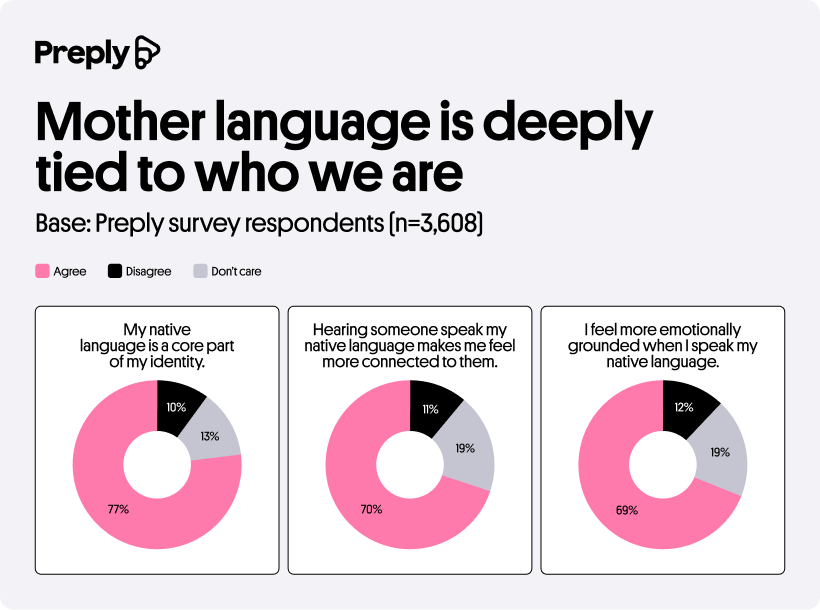
The team found that many respondents feel that their mother language connects them to who they are. 77% of respondents said their native language is a core part of their identity. They also reported feeling close to people who speak their mother language and that they feel more grounded, more deeply themselves when they speak in their native tongue. This supports research that suggests a person’s first language carries deep personal meaning.
Since language has deep roots in many people’s identities, it can evoke strong emotions. The team’s survey included questions about how native language made the speakers feel. The most popular response was comfort, a feeling shared by 29% of respondents. 23% said their mother language made them feel a sense of cultural identity and 20% said it made them feel proud. Nearly all responses were positive, with the exception of 3% feeling indifferent about their native language and 8% feeling negative emotions about it. The survey found that older generations experienced deeper feelings of cultural identity through language than younger respondents did.
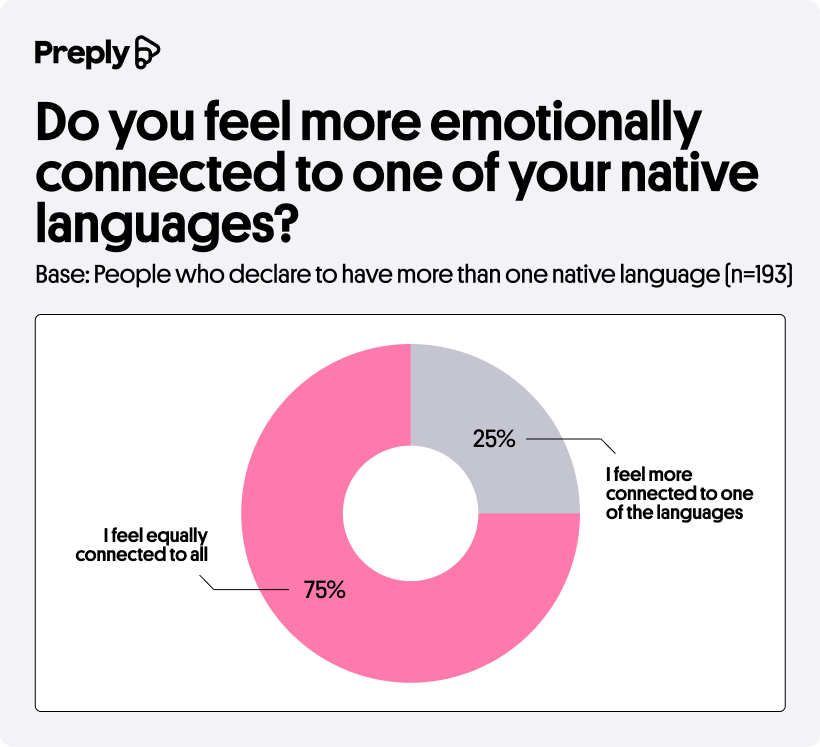
In today’s world, multilingualism is common. UNESCO reports that over half of the world’s population uses more than one language in their daily lives. That means some people have multiple native languages, so how does this affect their feelings about them? The team explored the question. 75% of people claimed to feel equally connected to more than one native language. This pattern shifts when asked to compare native language to second languages. 66% of people feel most themselves when using their native language. Half of the respondents said they use their native language when thinking or talking to themselves. Four in ten reported using the local language of the country they live in, suggesting that language adaptation has an internal component too.
Click below to zoom.
Many people use their native language as a connection within the family unit, too. 85% of immigrants with children said it was important to them that their children speak their native language as well as the local one. Half of the respondents worried that their children would lose a connection to their native culture if they couldn’t speak the language. About 75% of immigrants across surveyed countries said they speak their native language with their children. This was most common in the United Kingdom and Japan.
The Preply surveys provide a clear picture of how mother languages shape family life, identity, and emotional well-being.